
Across Wales, more foster carers are exploring a move from for-profit independent fostering agencies (IFA) to their local authority. It’s part of a wider shift in how we care for children. Welsh Government has committed to the removal of profit from children’s care, with restrictions beginning in 2026 and tightening further in 2027, so services move toward not-for-profit models that put children and carer’s first. This is known as the Health and Social Care (Wales) act 2025, which received Royal Assent and became law on March 24th, 2025.
Gerard and Karen’s story shows what that looks like in real life. They transferred to Foster Wales Monmouthshire in 2021 during the pandemic, after nearly a decade as foster carers. Their focus now is babies and young children, close to home.
A family steeped in fostering
Fostering runs in their family. “We started fostering in 2012” Karen explains. “My brother was a foster carer, my mother was a foster carer, my daughter then started fostering and we followed her.”
Before fostering, Karen spent 15 years working with the NSPCC, then moved into the Courts & Tribunals Service before deciding to leave her career to foster full time. Her husband, Gerard, continued his career full time, working in engineering for most of his life.
Both are now ‘retired’ from their previous jobs but have worked part time and full time between fostering over the years. These days, fostering is their full-time focus. Karen is also a Deacon and worship leader at their local church and still finds time to care for her 93-year-old mother!
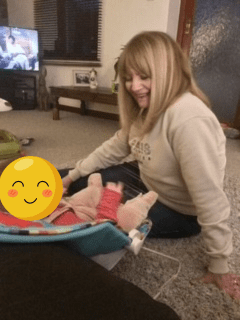
Karen’s mother is an inspiration to her, having fostered more than 50 children as a single carer until she retired at 73 – the kind of example that set the tone for everything that came after.
Over the years Karen and Gerard have fostered 10 Parent and Child families, 3 Parent and Child (Short Break), welcomed 7 Short-Term baby or children, and cared for at least 5 Children long term. It’s a lot of love and practical know-how.
To learn more about the types of fostering we offer at Foster Wales Monmouthshire click here.
You can learn more about Short Break fostering in our recent blog.
Why they transferred
By 2021, they felt they weren’t being called to care for many young children with their fostering agency. “We wanted to specifically foster babies, and IFA’s weren’t able to place babies as they usually went in-house.” Monmouthshire could honour their preferred age range and, crucially, offer more regular placements.
Karen and Gerard weighed up a reduction in weekly payment rate from their current independent agency, with increased frequency of fostering with the local authority, and realised that overall, the move to local authority would be positive. “With the IFA you were on a list and there weren’t enough children to place with every foster carer, so waiting times between placement were quite long. This meant no money coming in for extended periods.” Locally, they have also seen practical savings: “Foster Wales Monmouthshire recently agreed a reduction in Council Tax for foster carers of £100 a month which is significant.”
To see what other support and rewards we have on offer at Foster Wales Monmouthshire click here.
What feels different with the local authority?
More say. More connection.
One change Gerard and Karen value is direct access to the people who know the child best. “It’s definitely easier now. We can contact and speak to the child’s social worker directly. That was frowned upon in the IFA, we had to go through the agency.” That direct relationship helps them advocate for children and feel part of the team around the child.
They also feel better able to set clear boundaries about who they want to care for. “It’s easier to have your preferred age range with Foster Wales Monmouthshire.” For carers who specialise in babies, that matters. It also helps children stay nearby. “A baby being in a good routine is vital. Long travel disrupts that routine very badly. Mostly baby placements are local because of family time contact. Transporting a young baby for hours is not appropriate or acceptable.”
Children that fit their strengths and preferences
Gerard and Karen are open about how fostering through for-profit independent agencies can sometimes feel more complex. As Karen explains: “Children with less complex levels of need, that fit your preference, are more likely to be matched locally through Foster Wales Monmouthshire”. For Gerard and Karen, this local approach means they are often offered babies and younger children, which aligns well with their experience and strengths. Being matched locally, with a clear age range, gives them the best opportunity to provide consistent, nurturing care.
Feeling part of something bigger
Day to day, their supervising social worker and the child’s social worker make them feel valued.“It depends on the social worker, but I do feel valued – and the managers are approachable.” They don’t always make the coffee mornings because babies’ routines come first, but they know the support is there when needed. Karen added that they often lean on peer wisdom saying: “I learn more by talking to other carers than the training sometimes. It’s lived experience.”
“Transferring during Covid felt long.” – What’s changing?
Their transfer happened at a tough time. “It was six months and during Covid, so no face-to-face. It felt like starting over again.” That honesty matters, and it helped services learn. A lot has changed since Covid when it comes to the transfer process. Local authorities across Wales are acting on feedback from carers so transfers recognise existing experience, cut repetition, and feel more personal. The transfer process is quicker than ever, whilst maintaining the thorough screening process so that we maintain the exceptional quality of foster carers for our children. Welsh Government’s programme is about more than a legal change. It is a shift toward a stable, not-for-profit system that keeps children close to their communities and supports carers to do their best work.
Training that works around real life
Ongoing learning is an important part of fostering for Karen and Gerard, particularly when it comes to developing the practical skills and confidence needed to support babies day to day. Like many carers, finding the time and space for training alongside fostering responsibilities can sometimes be challenging.
As Karen explains: “In that last three years we’ve only had one face-to-face training course. Most learning is now online, and when you’re caring for babies it hard to carve out the time.”
Foster Wales Monmouthshire continues to work on this, increasing the number and accessibility of local sessions, while also opening up council-wide learning opportunities. There’s also a continued focus on peer support – creating more chances for carers to connect, share experiences, and learn from one another, because lived experience Is often the most powerful training of all.

Keeping children local
For Gerard and Karen, the purpose is clear. “It has to be about what’s right for that child or baby.” Keeping babies near family time and community is usually best. They’ve seen the difference reduced travel can make, for the child and for carers. This aligns with the national direction, where the system is being reshaped to keep children close to their homes and to ensure placements are available within Wales. Restrictions coming into force from 2026 and 2027 will limit for-profit expansion and new registrations, helping the sector move toward not-for-profit provision that keeps resources in local services.
“Most definitely there are so many children who need fostering in Monmouthshire”
Looking ahead, they feel confident. Stability, clear matching, and the chance to work closely with the child’s social worker mean they can pour their energy into what they do best – loving, nurturing care. Where there are opportunities for existing local authority foster carers, there are opportunities for future Foster Wales foster carers. This is where we need your help.
Thinking about transferring?
If you foster with a for-profit independent agency and you’re curious about what a move could look like, Gerard and Karen’s experience might help. Yes, change takes a little effort. But you won’t be starting again. You’ll be bringing your skills into a team that places children locally and involves you directly in decisions. You’ll be part of a system in Wales that is moving away from profit and towards the care that invests back into children and carers.
Start a conversation with Foster Wales Monmouthshire. Ask about your preferred age range, local support, and what a transfer would look like for you. If you’d like to speak to another carer, we can arrange that too. If you live elsewhere in Wales, visit the Foster Wales website, where you can find all the necessary information about fostering and contact details for your local authority fostering service.